19 Modern Minimalist Small Bedroom Ideas That Feel Bigger
Modern minimalist small bedroom ideas that make tiny rooms feel spacious. Clean lines, neutral palettes, and clever storage for a clutter-free retreat.
Minimalism and small bedrooms are a natural match. When square footage is limited, every item in the room either contributes to the design or detracts from it. Modern minimalist design embraces this constraint by celebrating quality over quantity, function over decoration, and breathing room over clutter. The result is a small bedroom that feels deliberately spacious rather than uncomfortably tight.
The Foundation: White and Light
Lighting and Ambience
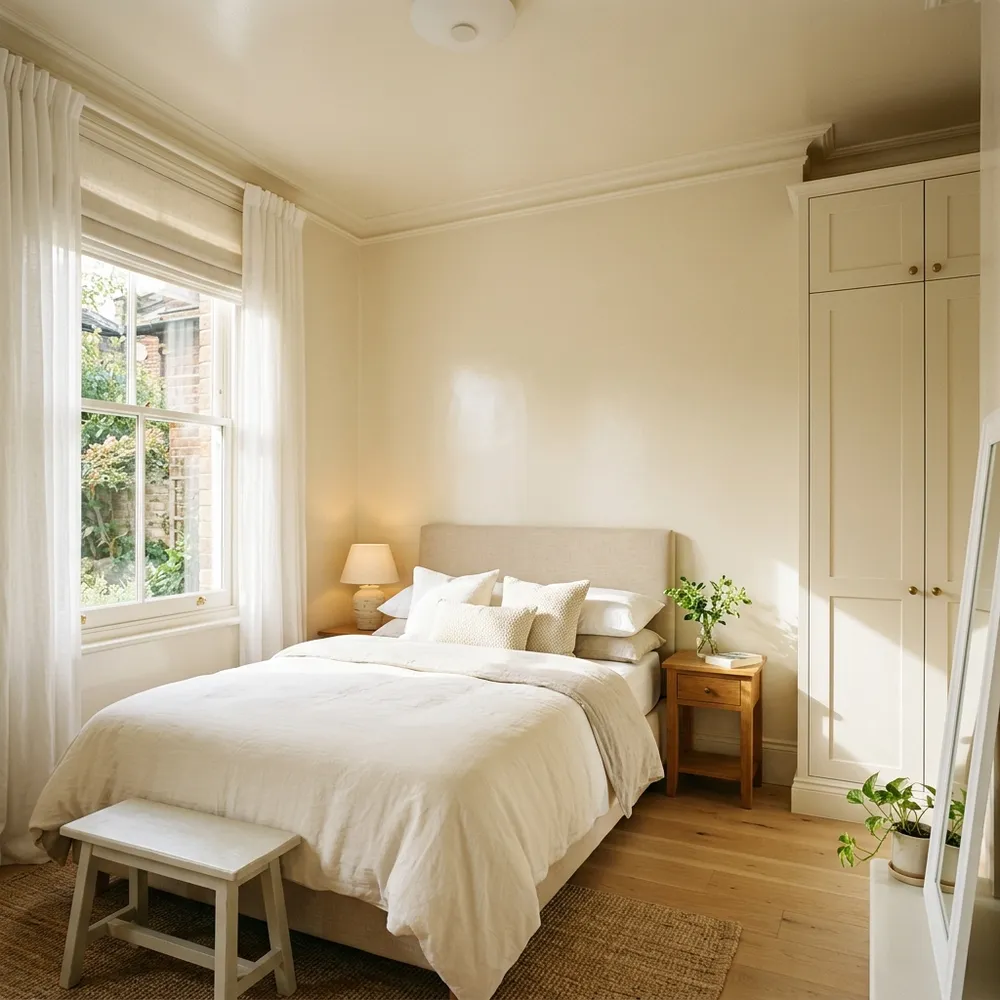
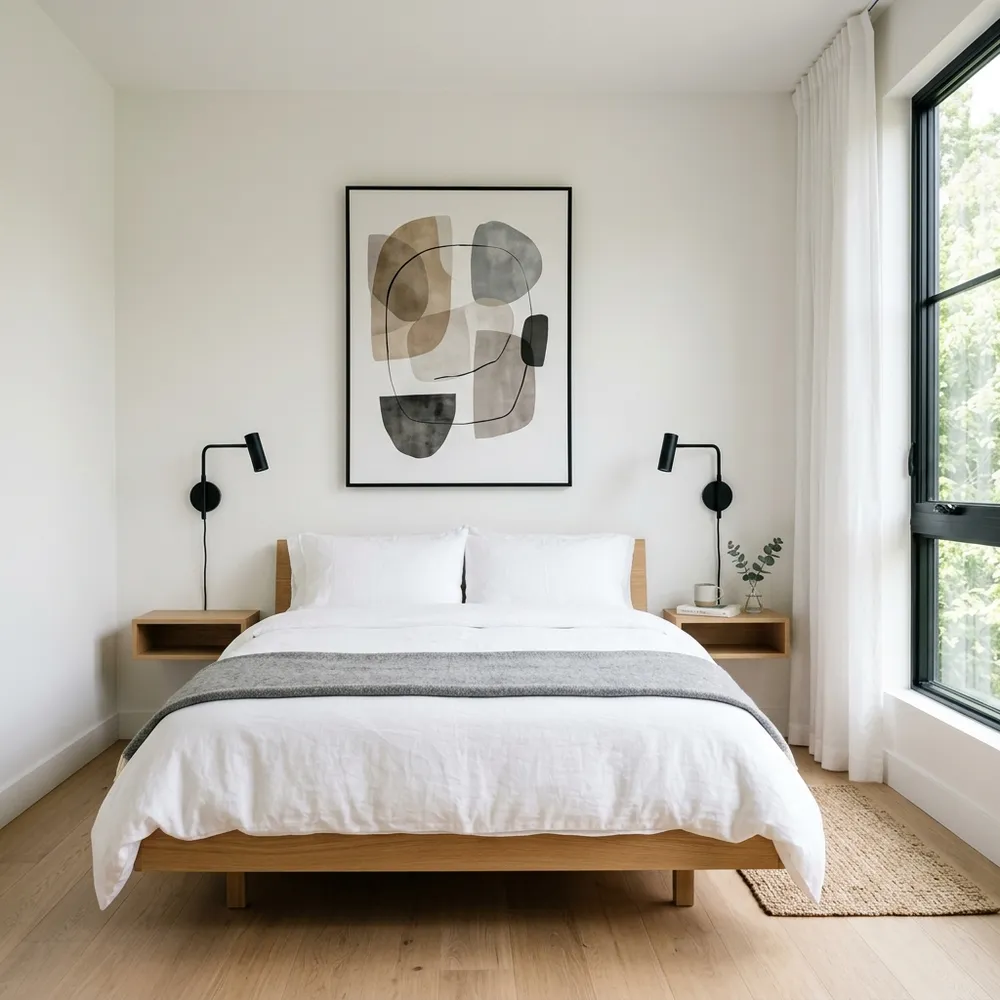
Start with white or very light walls. This is not boring — it is strategic. White reflects the maximum amount of natural light, pushing the perceived boundaries of the room outward. In a small bedroom, this effect is dramatic. A white-walled room with good natural light feels significantly larger than the same room painted in a medium or dark tone.
Choose a Low-Profile Bed
Art and Wall Decor
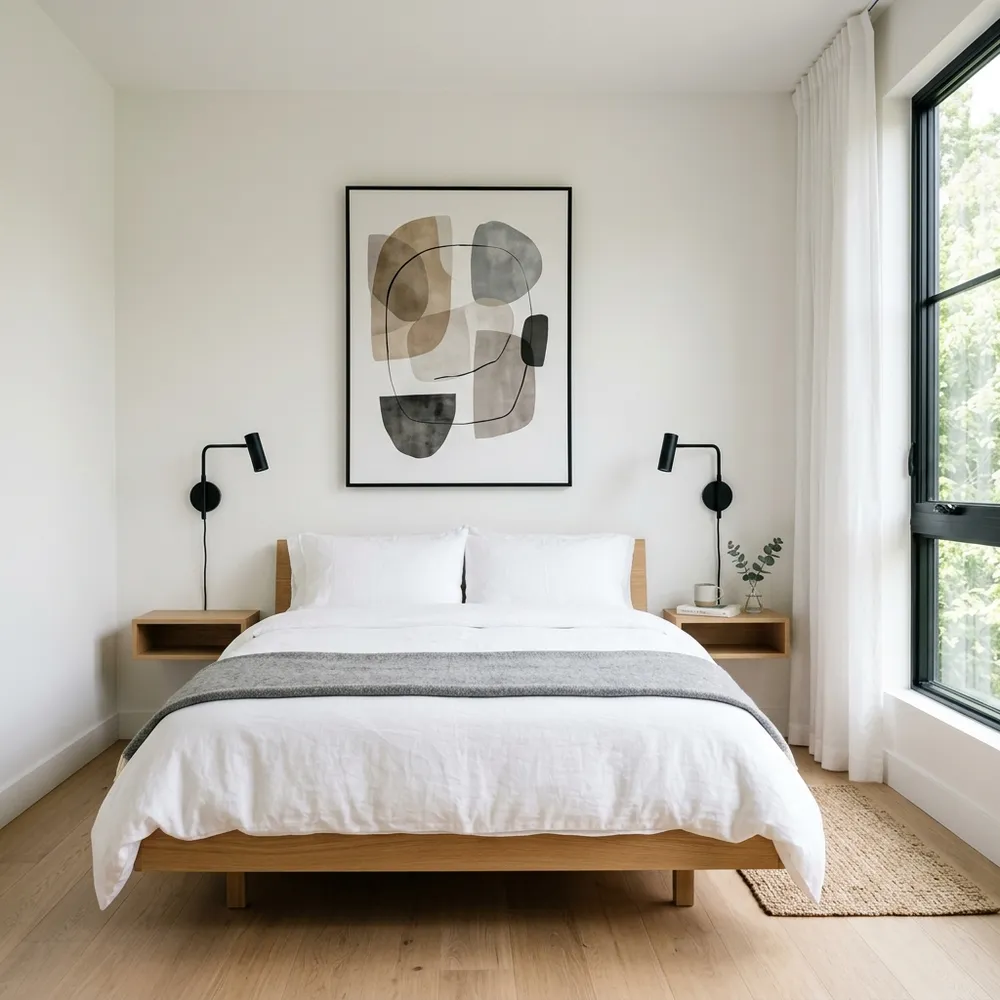
The bed is the centerpiece of minimalist bedroom design. A low-profile platform bed with slim legs or a floor-sitting Japanese-style frame creates a horizontal emphasis that makes the ceiling feel higher by contrast. Skip bulky headboards in favor of the wall itself serving as a backdrop. If you want visual interest, a single large art piece above the bed replaces the headboard concept entirely.
Hidden Storage is Essential
Smart Storage Solutions
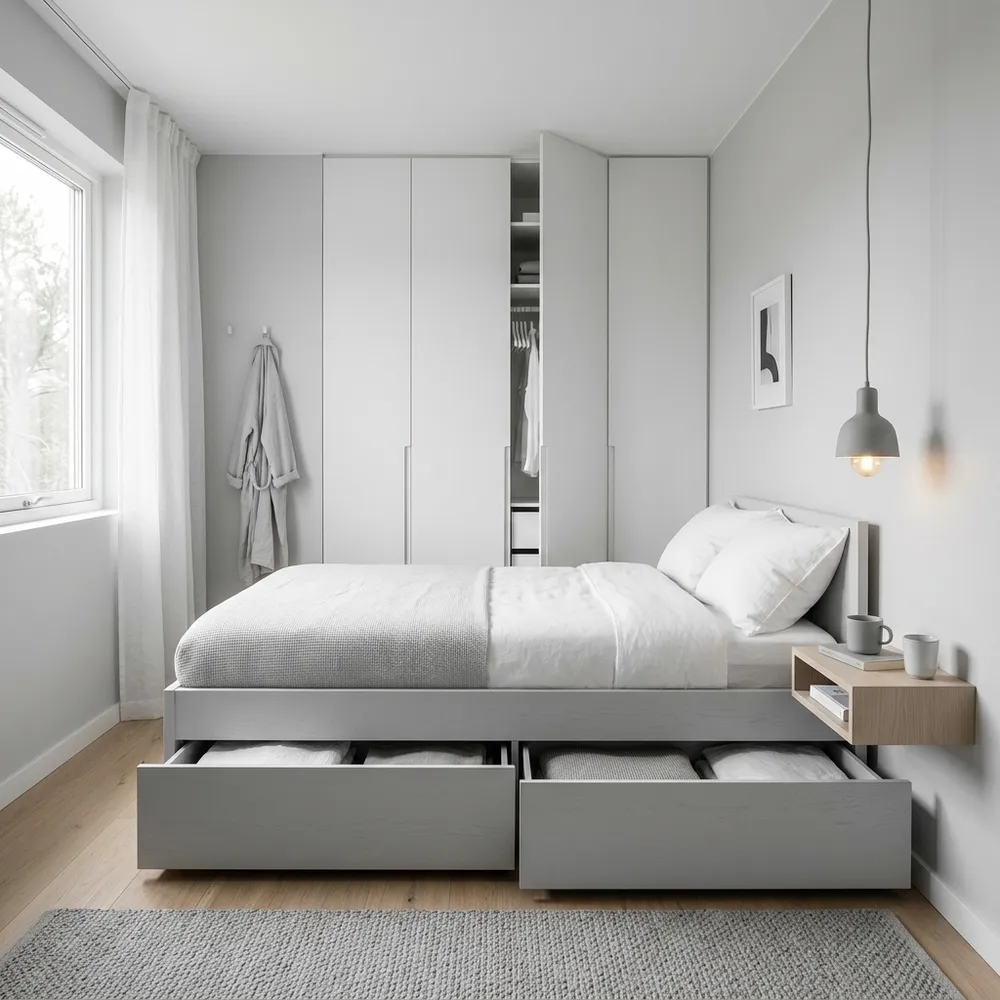
Minimalism does not mean owning nothing — it means hiding what you own intelligently. A platform bed with internal storage compartments, a wardrobe with sleek sliding doors, and wall-mounted shelves that look like architectural elements all provide storage without visual noise. The goal is that someone entering the room sees surfaces, space, and calm rather than belongings.
One Statement Piece Per Room
Ambient Lighting Solutions
In a minimalist small bedroom, choose one item to serve as the visual focal point. This could be a single oversized abstract print, a sculptural table lamp, or an architecturally interesting pendant light. Everything else in the room plays a supporting role through simplicity. This focused approach prevents the room from feeling empty while maintaining the minimalist ethic.
The Neutral Palette Expanded
Soft Furnishings and Textiles
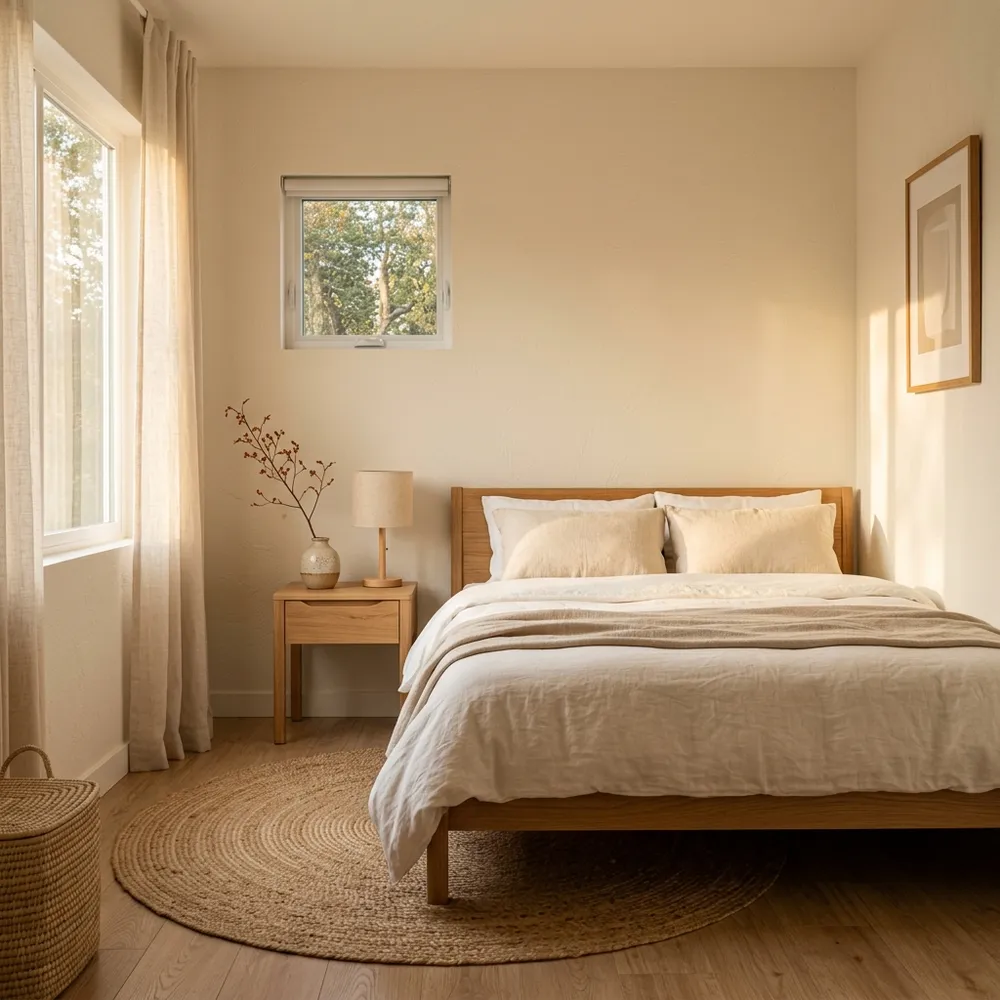
Modern minimalism goes beyond simple white. Layer warm whites with light grays, soft taupes, and muted beiges for depth without color distraction. Texture differences between materials create visual interest that compensates for the limited color range. A cotton sheet, a linen duvet, and a wool throw in similar neutral tones look rich and considered rather than monotonous.
Lighting Design for Minimalists
Creative Headboard Ideas
Replace visible light fixtures with integrated solutions wherever possible. Recessed ceiling lights, LED strips behind headboards, and wall-mounted reading lights with slim profiles all provide illumination without adding visual clutter. Smart dimming capability lets you shift between bright functional light and soft ambient mode with a single switch.
Flooring Choices
Selecting Quality Bedding
Bare floors with a single well-placed rug reinforce minimalist principles while keeping the room feeling spacious. Light wood floors reflect light upward and create warmth. A rug that covers about one-third of the floor area defines the bed zone without overwhelming the space. Choose natural fibers like jute or wool in neutral tones for texture that aligns with the minimal aesthetic.
Maintaining Minimalism Daily
Vertical Storage Options
The hardest part of a minimalist bedroom is keeping it that way. Build daily habits around the space: make the bed immediately upon waking, put worn clothes directly in a laundry bag inside the closet, and clear the nightstand surface every morning. A ten-second daily reset maintains the calm atmosphere that makes minimalist small bedrooms so appealing.
Frequently Asked Questions (FAQ)
How does modern minimalist design help a small bedroom feel bigger?
Modern minimalist design emphasizes clean lines, simplicity, and functionality, which are crucial for small spaces. By stripping away unnecessary clutter and focusing on essential elements, it creates an uncluttered visual field that makes the room appear more spacious and open. The absence of excessive ornamentation and bulky furniture allows the eye to flow freely, contributing to the illusion of a larger area and a more serene environment.
What specific design elements can I incorporate to make my small bedroom look and feel bigger?
To maximize the feeling of space, incorporate light and neutral color palettes for walls, bedding, and furniture, as these reflect light and make rooms seem brighter and more open. Opt for multi-functional furniture, such as beds with built-in storage or wall-mounted desks, to reduce floor clutter. Strategic lighting, including natural light, recessed fixtures, and wall sconces, can illuminate corners and expand the perceived size. Lastly, large mirrors can visually double the room's dimensions, while vertical elements like tall headboards or floating shelves draw the eye upwards, enhancing ceiling height.
What common mistakes should I avoid when designing a modern minimalist small bedroom to ensure it feels spacious?
A common mistake is over-decorating; even in a minimalist design, too many small items can create visual clutter. Avoid dark, heavy colors on all walls, as they can absorb light and make a room feel smaller and enclosed. Choosing bulky or oversized furniture that doesn't fit the room's scale is another pitfall, as it can overwhelm the space. Also, neglecting adequate lighting, especially natural light, can make a small room feel dim and cramped. Always prioritize functionality, scale, and clear pathways to maintain an open and airy atmosphere.
❓ Frequently Asked Questions
Was this design guide helpful?
Love these ideas?
Save this article to your Pinterest board for later inspiration!